
Guide
What people wonder about showering and skin
Every article is based on peer-reviewed studies; the sources are listed at the end.
Does a hot shower dry out your skin?
Yes, especially combined with harsh foam. Skin that spent 10 minutes in water at about 41 degrees lost more than twice as much water. Keep the water lukewarm, keep showers short and choose a gentle cleanser.
Why does skin itch after a shower?
The most common cause is dryness. Hot water and harsh foam strip away the skin's lipids, so the skin loses water, feels tight and itches. Lukewarm water, a gentle cleanser and a moisturiser after the shower are often enough.
Why does sweat smell?
Sweat is odourless. A few bacterial species living on the skin break down odourless molecules in underarm secretions; this is how sharp-smelling molecules are released.
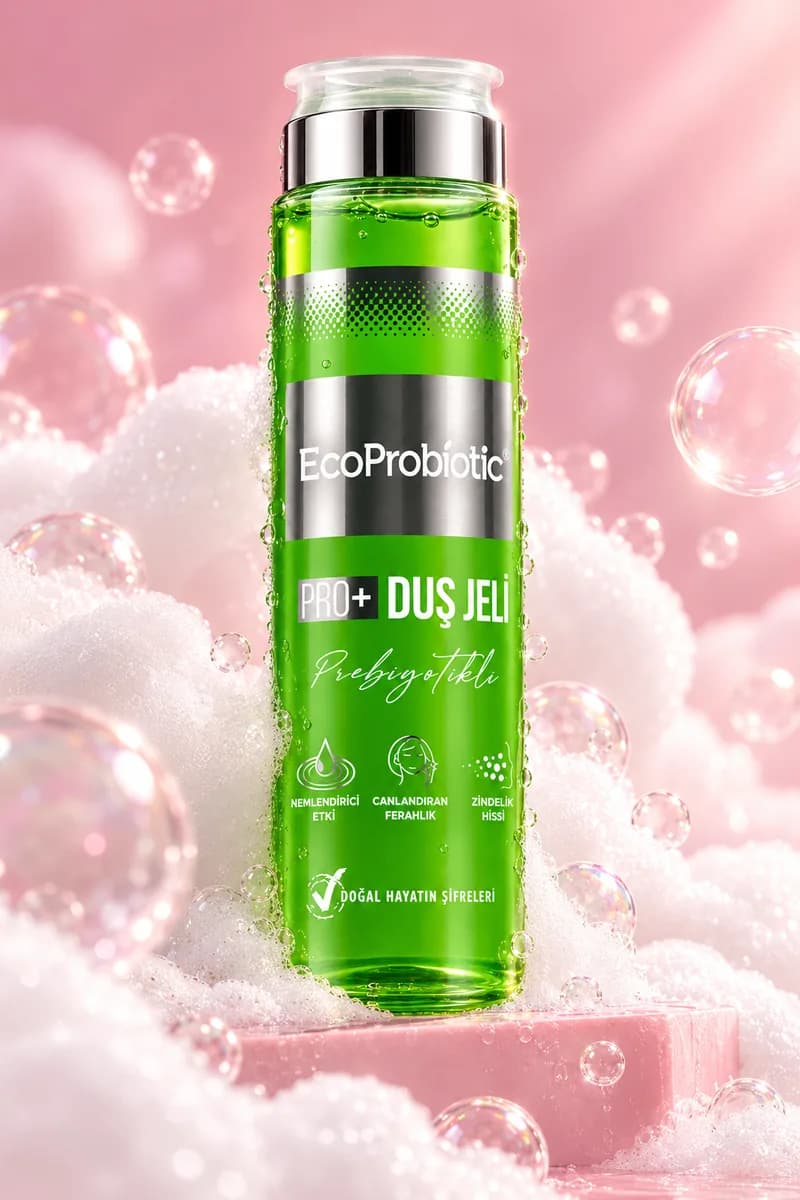
What does sulphate-free shower gel mean?
A shower gel made without harsh foaming agents such as sodium lauryl sulphate (SLS). These foaming agents act more strongly on the skin's lipids and proteins; they are one of the common causes of tightness after a shower.
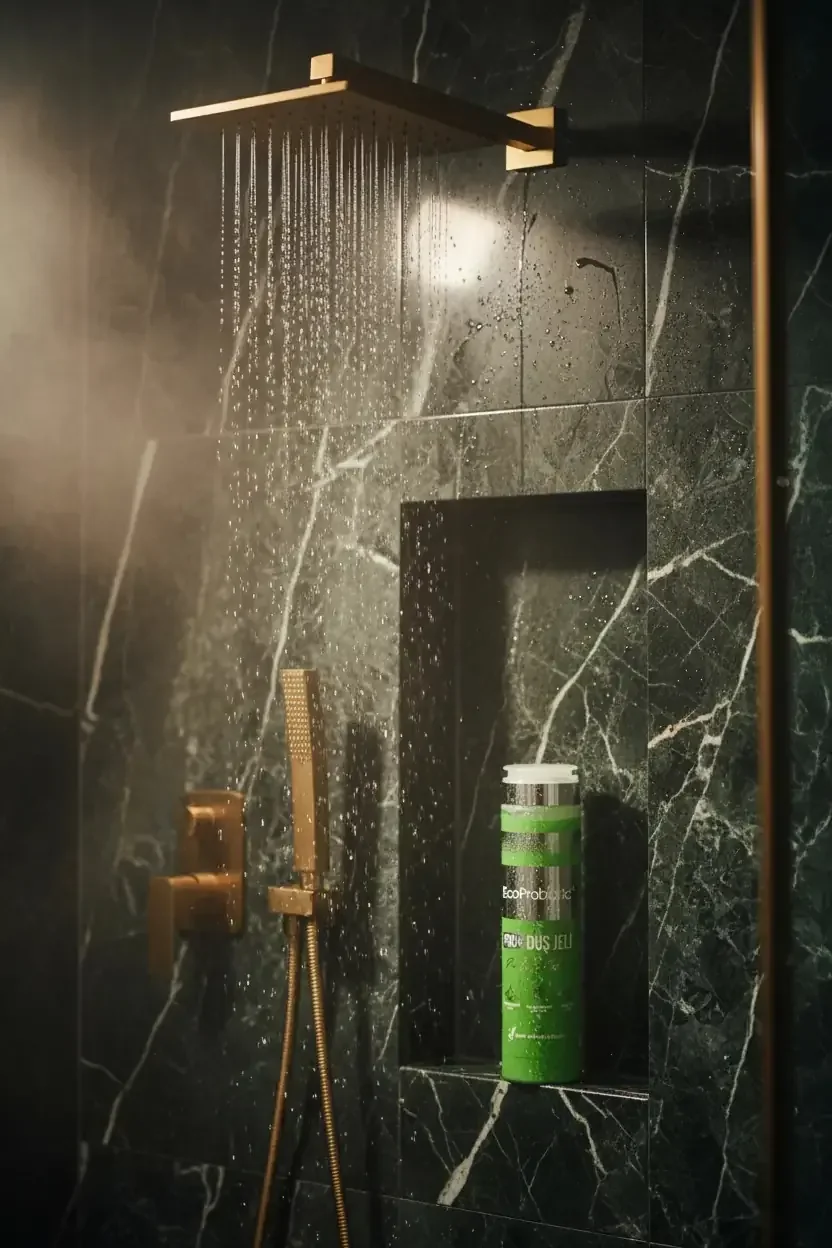
Does hard water affect your skin?
It can. On skin washed with hard water, more foaming agent stays behind and irritates it. Softening the water reduced the effect. Rinse the lather off thoroughly with plenty of water.
Flaky, dry skin on the body in winter
Cold, dry air weakens the skin's protective layer, and the longer hot showers of winter add to the strain. Keep showers short and lukewarm, use a gentle cleanser, then moisturise.
How to shower after exercise
After exercise, lather your armpits, chest and back carefully and rinse with plenty of water. If you shower more than once a day, keep the water lukewarm and choose a gentle cleanser.
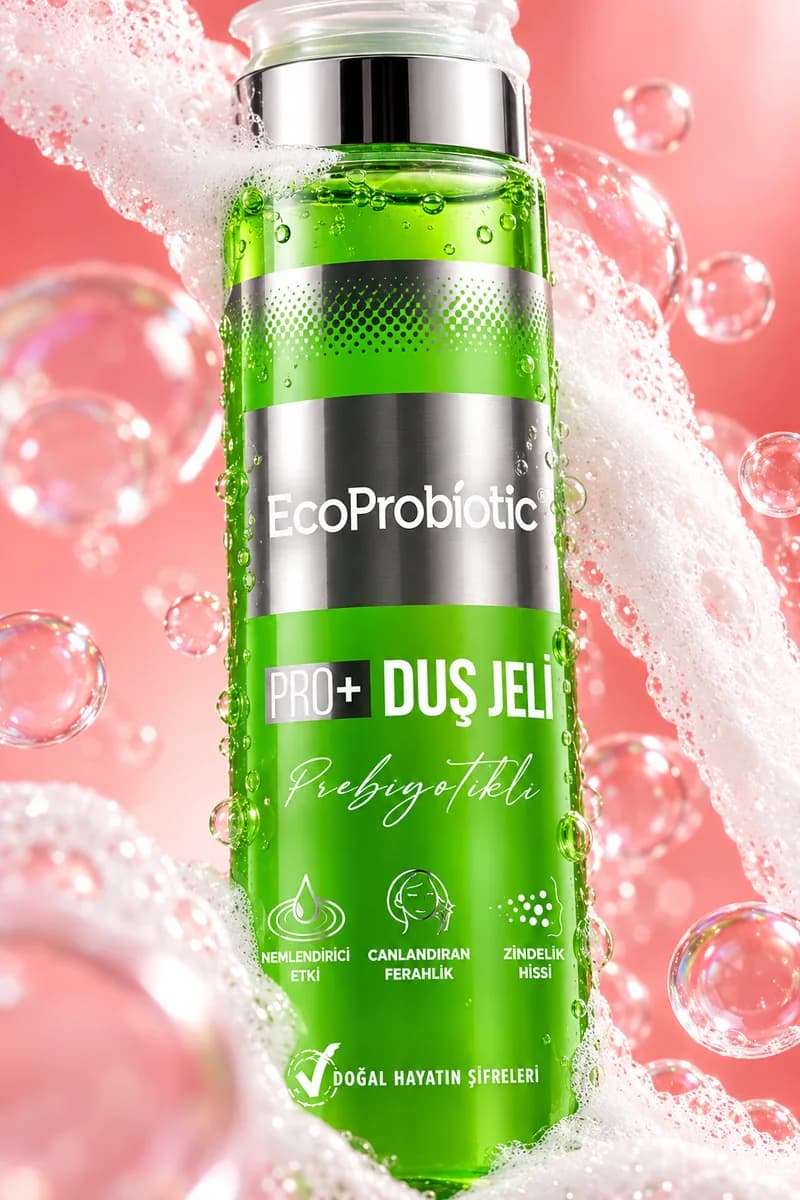
What is a prebiotic shower gel?
A body cleanser that contains a prebiotic. A prebiotic is a nutrient that beneficial microorganisms use selectively. The aim is to clean the skin without straining its natural balance and barrier.